Thursday, September 30, 2010

Coon Bidness


Cover Image: 'GOLDLICKS (Wangechi Mutu)" By Marilyn Minter

"Is this a magazine CRITICAL of coonery, or is this some sort of avant-garde attempt at irony?" my friend Marcus asked when I told him about the new literary journal Coon Bidness. Indeed, twelve months ago when I received an invitation to contribute, I also had a problem with the name. On the otherhand, my Public Enemy loving-Black power spouting homegirl from Long Island thought it was the funniest thing she had ever heard. Yet, with editors Greg Tate and LaTasha N. Nevada Diggs overseeing the project, I was certain that Coon Bidness would be like nothing we had ever seen before.

Although I've yet to see the final version of the "debutt issue," what I have seen is simply amazing. Overflowing with art, fiction, poetry and essays, contributors include Wangechi Mutu, Miles Marshall Lewis, Jessica Care Moore, Minister Faust, Iona Rozeal Brown, Siddhartha Mitter, Thomas Sayers Ellis, Laina Dawes, Arthur Jafa, Earl Douglass and many others. My own Black rock inspired short story "Daddy Gone Blues" (shout out to Stephanie McKay, Joi and Honeychild Coleman) also made the final cut.

While I had planned on writing a blog essay about this exciting new magazine, invoking everything from Zip Coon to Stepin' Fetchit to how much Spike Lee's preachy Bamboozled got on my nerves, I decided to let Coon curators Diggs and Tate speak for themselves. This interview was conducted via email...

1. There are a few people who find the title Coon Bidness offensive. What is the meaning behind it?

http://www.ebonyjet.com/uploadedImages/EbonyJetcom/test/Greg%20Tate.jpg
Greg Tate


Greg Tate: Coon Bidness (CB) is in the fine colored tradition of reversing racialized polarities, negatives to positives. Many in our vicious circle actually find the name quite delightful. Funny thing is, only Black Americans feel like they can say it out loud without risking a beatdown or being exposed as a closet racist.

But, CB was a well considered if knee-jerk artistic and political choice: LaTasha and I got disgusted over some younguns we know bickerin online about literary journals that published scant few-a-you people of de Negro persuasion. I went ballistic. I told Tasha, 'Man that's some coon bidness there; especially 160 years since self determined folk like Frederick Douglass, Martin Delany and David Walker were self-publishing anti-slavery when Dixie was king and a nickel could get shot just for showing off they literacy.’ Plus, we couldn't call it Emerge, Upscale, Black Enterprise or Black Tail; all the other good Black Progressive names were taken.

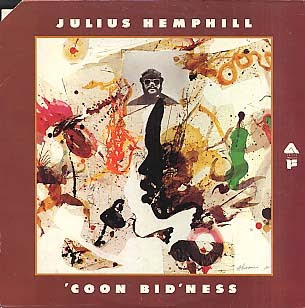
CB is also our quiet homage to the late great jazz musician and conceptual dramatist, Julius Hemphill. He released a quite crackling avant-garde album by that name in the 70s. Whatever respectability CB has we've completely borrowed from the very refined and adventurous Mr. Hemphill.
https://blogger.googleusercontent.com/img/b/R29vZ2xl/AVvXsEikdXRXDHYY0Lqkyd-QvrsyDzilL04n4DDFn0NvroGRJIG4jSoFZ9HeQRmnp5uoUCUx9qAaG2Abq_ZQmYWgv-Jj2QFZx9tWx5nW_xaLQlY__kS7kSjAgZyImW77OI3mX-8Ah3-C/s320/12410.jpg

However, CB is also our oblique response to the Obama era. Thanx to Brother President, his gorgeous sensuous ebony Glamazon of a wife Michelle, and those precious kids, Blackfolk have never moved about this land feeling so proud and respectable.


LaTasha N. Nevada Diggs: We did have a conversation about the name of this baby and came to an agreement that one, this was going to show out some folks while others would take the chance and support us with their work. I had folks – good friends – scold me about the name. They felt we (I in particular) was marginalizing/sabotaging myself especially since I am the youngster in this endeavor; that I do not have much suction anywhere and perhaps less resources that entities--be they those in some academic/publishing/programming power--don't know who I am or choose not to know who I am. I am, to a certain degree, taking the greater risk. They hated it. Some choose their petitions to be silent: politely so. Some just told me, ‘Hey I
just don't see myself being associated with some thing called this.’ They did not get it nor did they want to engage.


With that said, it highlighted an argument that is spoken in public when it comes down to our positions as writers of a browner hue. There is a presumed limitations of publications that exists and a an outer worldly desire desire to be accepted by the very publications that have denied us moderate access. That with this desire, we often rather complain and petition these very publications than create something new. The tradition of magazines, journals and chapbook series has always included one or several voices that decided they wanted to establish something ELSE and in doing so, they created yet another platform to feature WHAT they believe in.

With the rise of African-American writers coming out of MFA programs, there seems to be a lapse in realizing and remembering just how much power they have. I remember a talk Al Young gave to a workshop some years ago about opening oneself to the types of publications you least expect publish creative works.

Also, during the summer of 2009, I began researching the works of Al Young and Ishmael Reed.

http://www.jazzrecordcenter.com/store/images/young1091.jpg http://www.nathanielturner.com/sittingpretty.jpgbooks by Al Young

In my research, their history on do-it- yourself (DIY) really jarred me in a positive way. Regardless of what one may assume of their work, they highlighted to me a somewhat forgotten history of DIY publications occurring in their prime. Jayne Cortez is in my opinion, the very person I look to as an inspiration for DIY. She doesn't wait on jack.We have much to learn from her consistency in this matter.


If we turn to 2010, DIY still exists, often manifested in form of the urban novel, the chapbook created by the hottest slam poet, the young spoken word artist who had made a name on the college chitterlin circuit. Vanity publishing has for a moment, resided in the funny place. We celebrate those who can do it and yet, it can be looked down upon. There is an insistence that we can’t do for self without a major publishing house backing us up. And then every couple of months, the New York Times does a story on the cat who sells 10,000 copies of his joint on the subways.


I understand the politics of the game and what that/this means and where it /he/she/they can take. Greg nor I, are not particularly set of following that jive. Perhaps I should. You tell me. Would we be talking about CB had I? We are also giving a big "wake the fuck up bitches" to those who've forgot.

http://www.lauriebooks.com/laurie/images/items/25494.JPG


2. How would you define the Coon Bidness aesthetic?


GT: Highbrow but raunchy. Classy but nasty. Charming but racy. Vulgar but impeccable. Tart but smart. Radical but tactical. Militant but pretty like a mutha. We're calling our debutt (sic) 'The Critical Ass Issue' for some profoundly funkybutt reasons. All comedians and shake-dancers know The Ass has quite a mouth on it, a deeply probing intellect, and quite a raffish, roguish style in dress all it's own.


LD: About this particular issue: Ass of all equations. Assed Out. Showing One's Ass. Hot Ass. Prophetic Ass.

Ass Backwards. Sweet Ass. Lack of Ass. Linguistic Ass. About CB in general: Genuine. Intellectual. Young. Flexible. Political. Intimidating. Silent like a samurai.

http://upload.wikimedia.org/wikipedia/en/0/03/Black_Samurai.jpg


3. How is Coon Bidness different from other literary magazines?


GT: Besides the obvious, as in being ill enough to BE a literary journal called 'Coon Bidness.' But, just know that when you compare CB to other journals, all I think of is Muhammad Ali. Like The Champ, CB is, ‘the loneliest of boxing’s poet laureates.’ CB is too pretty, too fast, too smart for those other rags to fight. Why, just last week CB, murdered a rock, injured a stone and hospitalized a brick.

http://crossfitkitchener.files.wordpress.com/2009/07/muhammad-ali1.jpg


LD: I don't if it's better than any at present. I don't know if it's a hot mess. All I can say is that CB may be considered an underdog. CB also scared the chitterlins out of a cab driver last week. When CB is mad, you really should take heed.


4. What were some of the joys and pains putting together the debut issue?


GT: First joy was realizing who among our contacts was too hoity-toity, too chickenchit or just too bored with us to bother consorting with some foolishness called Coon Bidness. Dem kinda proper folk sent us NO work, even after kindly repeated requests. Second joy was the high-cotton caliber of work we did receive from poets, writers and artists, some very well known, some all but unknown. Everybody brought their triple A game, some even brung their triple XXX game. Everybody brought the ruckus--The Bidness, as it were.

Third joy was that some of the best and brightest work in the mag came from writers neither LaTasha nor I had even heard of before we began stockpiling literary weapons. Fourth joy is how pretty our triple-fab designer LaRonda Davis is making CB look. LaRonda got style and she versatile.

Our biggest pain has been proofreading 123 pages of Certifiable Black Genius. Fortunately, our Research Queen/Copy Czar Sun Singleton is crawled up that 'Critical Ass' crack with a blowtorch, some pliers, and an optical speculum, all to insure we don't make a sloppy, medieval strobe-light ass of ourselves once the mag sees the light of day.


LD: We fought. I think we fought because of many of things Greg has already pointed out when we first sent the word out. NO ONE RESPONDED. It was deep. It was painful. It was a WOW moment. And yes, some folks we personally sought sent nothing. Now the reasons for why they don’t know, but it did cause some frustration. So yeah, it hurt my feelings, it hurt Greg’s: not at much to give it up.


When the submissions did start coming, CB began to look serious. We received a range of materials. In any case, we got enough to go blind over and whittle down to 123 pages. We changed the cover art several times because the women artists featured were throwing so many gems at us.


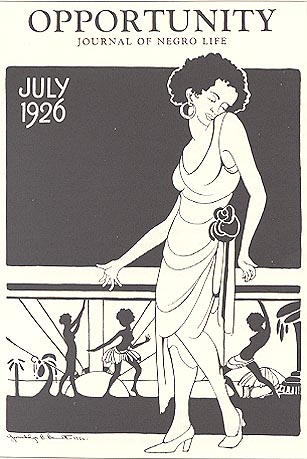
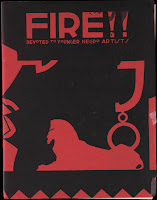
5. From Wallace Thurman's 1926 periodical Fire!! to the more recent Miles Marshall Lewis edited Bronx Biannual, black literary magazines don't seem to last long. How do you hope Coon Bidness will change that cycle?
http://www.philsp.com/data/images/o/opportunity_journal_192607.jpg https://blogger.googleusercontent.com/img/b/R29vZ2xl/AVvXsEi2LojiLkhP97ltijGw7jguT3S-HopQg0J0dLbf-JCdx3dxg1B-T5FuhvBLQgk00FyCLFGw42oQty5HbnyEHq2XQi52B-hHVW_LesouCk1W2kkT78FVktRfI8Upcqx28I0AX8EP3Q/s200/fire.jpg http://www.akashicbooks.com/bronxbiannual1.jpg


GT: Ha--one never knows do one? We could be a one-off too. Of course titles do fade and get revived all the time in the publishing world, so maybe all those you mentioned above are merely in limbo, incubating until the Fire Next Time or til the hiphop nation comes back. For the record though, we've already begun working on the sequel ‘Advanced Ebonics.’ Keeping vernacular hope alive since Toussaint wrote the Art of War in kreyol. Nuff said and It's clobberin' time.


LD: Who really knows?. I’m enjoying the frustration and discovery of this endeavor and it’s going to go wherever it decides. We do have some pieces that did not make it to first one up in the second. However, as Greg knows already, I do not want give to this project a deadline or an ultimatum. I like to marinate. Let it be like Nathaniel Mackey’s Hambone and come out whenever we decide or let it be that one issue that set out to fuck with folks. We’ve achieved what we wanted to do.


Coon Bizness will be released on October 14th

Facebook:
http://www.facebook.com/profile.php?id=646067716#!/pages/Coon-Bidness-Magazine/155793724450579?ref=mf

http://ucblibraries.colorado.edu/musicimages/Rag/RagCoonCoon/RagCoonCoon01a.jpg


Labels: , , , ,

Thursday, October 25, 2007

A Love From Outer Space: Why Greg Tate Matters


This morning, I couldn’t write. Though I’m on deadline to finish a Village Voice critique about my favorite band Apollo Heights (whose disc White Music for Black People should be blasting from your boombox right now, since its the perfect soundtrack for the forthcoming narrative), I can’t wrap my mind around a review at this moment.
Instead, I sat down at the keyboard and chopped-up a textual testimonial to one of my favorite writers, once known as Ironman.
Last Friday evening at the Studio Museum of Harlem on a 125th Street, a bunch of the New York Niggerati (and a few palefaces) gathered to pay homage to cultural critic, short story writer, musician and Black aesthetic lighting rod Greg Tate. Looking as young as the day I first met him more than two decades before (black don’t crack), it was amazing that the brother was turning fifty years old.
With familiar folks like Vernon Reid, Dream Hampton, Kevin Powell, Maureen McMahon (whose 2004 tome Right to Rock: The Black Rock Coalition and the Cultural Politics of Race is a must buy), Charles Stone III, Trey Ellis, Bruce Mack, Karen R. Good, Arthur Jafa, Nicole Moore and others in attendance, all were gathered to celebrate the birthday and legacy of the Afro-American king of funky critical bop.
Though I try not to spend too much time around other writers (their mood swings and ego trips are often unpredictable), I was more than happy to troop from Crown Heights, Brooklyn to Harlem, U.S.A. to pay tribute to the man that “set it off” for a generation of “freaky-deke cult-nat” journalists, essayists, painters, screenwriters, directors, et al.
For better or worse, if it were not for Greg Tate, there would be no Bonz Malone, Harry Allen, Joan Morgan, Kris Ex, Scott Poulson Bryant, Toure, Danyel Smith, Michael Eric Dyson, Karen R. Goode, Selwyn Seyfu Hinds, Smokey Fontaine, John Caramanica, Jeff Chang, Amy Linden, Tom Terrell, Mark Anthony Neal, Tricia Rose, Sasha Jenkins, DJ Spooky (aka Paul Miller), Dream Hampton, Miles Marshall Lewis, Aliya King, SekouWrites, Kenji Jasper, Oliver Wang, Cheo Hodari Coker, Keith Murphy or myself.
Not to say that we wouldn’t be writing for somebody (perhaps medical journals or antique mags), but it was from studying Tate’s music writing mojo like cold lampin’ graduate students that helped give us form different options. Like Miles Davis and Wynton Marsalis, the Beatles and Oasis, Grandmaster Flash and DJ Shadow, it was Tate and all of us.
On that dreary evening last week, as the sky outside cried Mary, I strolled downstairs during the middle of former Village Voice music poobah Robert Christgau tumbling over Tate’s Tyrannosaurus sized word play as he read an essay that he had edited years ago. Please don’t ask me the title, but I know it was one of those funky joints that Tate had scribbled when he was still calling himself “Ironman” back in the early ‘80s.
One brief aside: Greg’s guitar strumming homie Vernon Reid later commented, “I always loved Greg because he had named himself after my second favorite Marvel Comics character.” Truthfully, I always thought the “Ironman” moniker was swiped from the esteemed Eric Dolphy disc. Who knows, maybe we’re both right.
While I never shared the same enthusiasm for the writing style of the so-called “Dean of American Rock Critics” that editors/writers Joe Levy, Ann Powers, Eric Weisbard, RJ Smith, among others have for Christgau, I will always be thankful to the man for being unafraid to be, as Tate himself once described him, “a one-man affirmative action committee in the 1980s…all because he believed Afro-diasporic musics should on occasion be covered by people who weren't strangers to those communities.”
In other words, it took more than a few youngbloods wielding fine-point pens, hostile attitudes and boogaloo styles to scare Bob. My homie Barry Michael Cooper, who would later become a great writer himself, told me how when he was a novice he called Christgau at home one night out the blue. In an interview we did for Stop Smiling magazine earlier this year, Cooper related this funny anecdote.
“I called him up at 12:00 midnight and said, ‘May I speak to Robert Christgau please?’ He said, ‘Who the fuck is this?’ I said, ‘My name is Barry Cooper.’ And he said, ‘Who the fuck is Barry Cooper?’ ‘Well, I’m a writer,” I said. ‘I just wanna tell you I love the newspaper. I love the music criticism, but that piece on Bootsy’s Rubber Band was bullshit. I used to get high to this in college and I can write about it.’ He said, “I’ll tell you what, do you have anything?’ I said, ‘Yeah, I wanna do something on Parliament- Funkadelic.’ At the time, they had an album called Glory A la Stupid. And he said, ‘Bring it to me. Let me take a look at it. If it’s any good, I’ll run it. If it’s not, if you call me again I’ll have you arrested for harassment.’”
Despite the fact that I never worked with Christgau, I clearly remember when he contacted former Set to Run publicity honcho Leyla Turkkan in 1992 (who at the time, handled most of the Def Jam acts, the Delicious Vinyl artists and Ice Cube), and he was on a serious mission to recruit more “urban writers” to vote in the annual Pazz & Jop poll; it might not seem like such a big deal today, but back then…”
Hell, that was during the same period that one prominent Caucasian music editor (who is still in a position of editorial power today) told the same publicist something along the lines of, “…black music writers don’t write that well.” It’s crazy what some people believe. However, if you’ve taken a glance at Rolling Stone, Blender, GQ and Esquire magazines lately, that opinion still seems prevalent in 2007.
Though I haven’t looked at Spin thoroughly in recent months (with the exception of their cool ass “Punk ‘77” issue last month), I can honestly say that former editors John Leland, Frank Owen, Simon Reynolds, Sia Michel and Charles Aaron (who still slaves there) were more down with the Negroes (Barry Michael Cooper, Bonz Malone, Quincy Troupe, and Sasha Jenkins) than any other music glossies. Hey, I’m just saying.
But, rewinding back to the subject at hand: in the early ‘80s, when crack first emerged in Washington Heights and I still lived uptown in my grandma’s 151st crib, I chanced upon Tate’s byline in the Village Voice. Though I had wanted to be a writer since I was a one-finger typing kid ripping-off Twilight Zone plots and, later, hoping to sell scripts to DC Comics when I was thirteen (oh, the wonders of youth), I was a voracious reader who at the time was addicted to the so-called New Journalism posse.
A geek college dropout, I went to the library everyday after my midtown messenger gig and devoured old magazine stories by my lit heroes Nik Cohn, Gay Talese, Tom Wolfe, Pete Hamill, Jimmy Breslin and Orde Coombs. At the time, between delivering packages to random Broadway actresses on the upper west side and superstar designers in the garment district, I wrote small stories for random magazines, but nothing major.
Truth of it was, there weren’t many options for a young Black writer who hadn’t grazed through the ivy of Yale, Brown or Harvard; or, so I thought. Truth of it was, there was no such thing as The Source, Vibe or XXL, and being a hip-hop writer meant either tagging subway walls or writing rhymes in your notebook. Truth of it was, none of us had any idea how big this monster called rap would grow before it started to eat itself, but we loved it (I’ve never thought of hip-hop as HER, but maybe that’s my own lack of sensitivity) with a serious passion.
As my Brooklyn bred homeboy, acclaimed journalist and director Nelson George once said on some N.Y.U. symposium in 2004, “I remember receiving hostile reactions from many editors when I tried to write about it [hip-hop]…as if hip-hop were an infection that could be cured by simply ignoring it.”
While my mind is now slightly weary and more than a few brain cells have been blunted away in project staircases, I’ll guess it was sometime in late early ’85 when I plucked down my single dollar at a shabby newsstand and picked up that weeks Village Voice. Yes kids, we actually had to BUY it back thenthere were no free lunches or free Voice.
Boarding the subway at 145th and Broadway, I copped a squat on the #1 train. “I love the smell of ink in the morning,” I thought, opening the paper. God, how I wish I could remember what was the first Tate piece I devoured, but that’s not the point at all. What I’m really trying to say is, “Dat nigga changed my life!” The last time that had happened was when I heard Mile's Water Babies in 10th grade, flipped the fuck out.
In a few years other folks of color (as opposed to, er, colored folks) like Nelson George, Lisa Jones, Barry Michael Cooper, Carol Cooper (no relation), Pablo Guzman and Harry Allen would also bum rush the post-soul/hot funk/hip-hop journalism show in the Village Voice, but it was big brother Tate who led the way.
“Mommy, what’s a semiotic?” I wanted to scream after reading that first piece. Yet, since this was a time before computers, aspiring writers actually had to leave the crib to do research. It wasn’t long before I was buying old James Brown and Funkadelic albums at the Music Factory in Times Square (where cranky, cigar smoking Stanley Platzer reined supreme), reading dusty paperbacks by Samuel R. Delany and Ishmael Reed, tripping through the post-structuralism weirdness of Jean Baudrillard and Jacques Derrida and having my mind blown by Clement Greenberg as well as a mothership of other musical and literary others.
Though some stuff I still don’t get (“…yo Kidd, what’s up wit dat bugged mofo Cecil Taylor shit anyway?”), I am more than happy that Greg Tate had put up the signposts for this black boy to follow. In fact, one of those signs might have read: Enter At Your Own Risk…This Means You!
Unlike today, (I say as I shake my big daddy cane at the kids throwing rocks at my window) where one can rant opinions on a blog until they’re red, black and green in the face, that luxury wasn’t an option in our yesteryear.
It wasn’t until almost a year later that I wrote two music reviews for a friend’s punk zine called Misspent Sonics that I finally got a chance to test the waters of my future profession. Since I wasn’t that much of a punk since hanging-out at the Marble Bar in Baltimore (hell, even David Byrne and The Clash had discovered Africa by 1986), I offered to review Fishbone’s self-titled EP and the Beastie Boys debut Licensed to Ill .
Written in a fog of reefer smoke and malt liquor (by that that point I had discovered Hunter Thompson and Lester Bangs too), I sat in front of a black, electric Smith Corona and banged to the boogie. Once the pieces were printed, it didn’t take long for someone to point out that I had Xeroxed Greg Tate’s mau-mau/voodoo/ post-bop/pirate-radio/hoo-doo style.
“That’s not true,” I lied. “We’ve just been both influenced by the same writers.” Yeah, right. True, I too drank from the well of wild stylists like Amiri Baraka, Ntozake Shange and Clarence Major, but it was Tate who had guided me to that black water in the first place.
After joining the Black Rock Coalition in 1985 at the urging of guitarist Vernon Reid (whom I met by chance in Sounds Records over on St. Marks Place), I would see Greg on a regular. Yet, much to my dismay he didn’t talk much; at least not to me. That is, not until I had penned a story about Living Colour in a now defunct East Village rag called Cover when I was twenty-three.
One night, as I stood in line at the long gone Lone Star Café, I saw Tate in front of the door. “Yo, Michael,” he said. I looked at him, shocked that he even knew my name. “I read your story in Cover. It was pretty good.”
Staring at him, baffled by the compliment, I simply mumbled, “Thank you,” as I thought my head might explode. Stepping out of the line with my then girlfriend Fran, I ducked around the corner, breathing deeply.
“Are you all right?” Fran asked. "You have an asthma attack or something?"
“He liked it,” I muttered, still unbelieving. “The nigga liked my story.”
“What are you talking about?”
“Greg Tate. I can’t believe it, he liked my article.” Fran stared at me as though I was nuts. Grinning like a fool, I hoped that nobody saw my silly ass losing my mind. It was crazy, but for at that exact moment that I felt like a true writer.
Twenty-one years later, as the ever-lovely writer/director Dream Hampton stood in front of the Studio Museum podium sprinkling accolades on Greg Tate’s formerly dread-locked head, I thought about the few real times I had spent within the presence of the master: can’t forget the nigga’s party in ’88 when he played an advance of Public Enemy’s instant classic It Takes a Nation of Millions to Hold Us Back all night long; can’t forget the night he first played guitar in public at the old Houston Street version of the Knitting Factory, while a few “real” musicians talked shit in the back of the joint; can’t forget the night we shared a cab back uptown one ‘80s night, with guitar extraordinaire Jean Paul Bourelly and future wunderkind producer Craig Street; can’t forget that recent night this past July, when a bunch of the Bronx Biannual literary magazine crew including editor Miles Marshall Lewis, Sun Singleton, Carol Taylor, Reginald Lewis (& his wonderful wife Melinda) and brilliant singer Stephanie McKay hungout all night long, talking mad shit at NoHo Star until last call.
Though I won’t front that Greg Tate and I had ever became real friends (sure we know each other, slap five on occasion and talk much smack when we’re standing next to one another at an event), I can honestly say, if it wasn’t for his early writings in the Village Voice (as well as the Musician, Record, Down Beat and other magazines), who knows where I might be right now.
To paraphrase a line from the gangster rappers interview handbook, if it wasn’t for Greg "Ironman" Tate, I might be robbing your house right now.

Labels: